

Venezuela: Oil Rich, Governance Poor

James Tucker
Over the last couple of days, social media, news outlets and broadcasting channels have blown up over the news regarding the ousting of the Venezuelan president, Nicolás Maduro and his wife, Cilia Flores. The world has given mixed reactions with part in support of toppling a dictatorship while others are in protest over violating international law. Maduro is set to face narco-terrorism conspiracy, cocaine-importation conspiracy and weapons charges in the US and will stand trial in the coming weeks.
Where the finance world has shown greater interest is in the vast wealth of oil reserves located throughout Venezuela and what it means for markets now that the US will work closely with Vice President Delcy Rodríguez as she steps into the presidency role in the interim.
Background To The Venezuelan Oil Industry
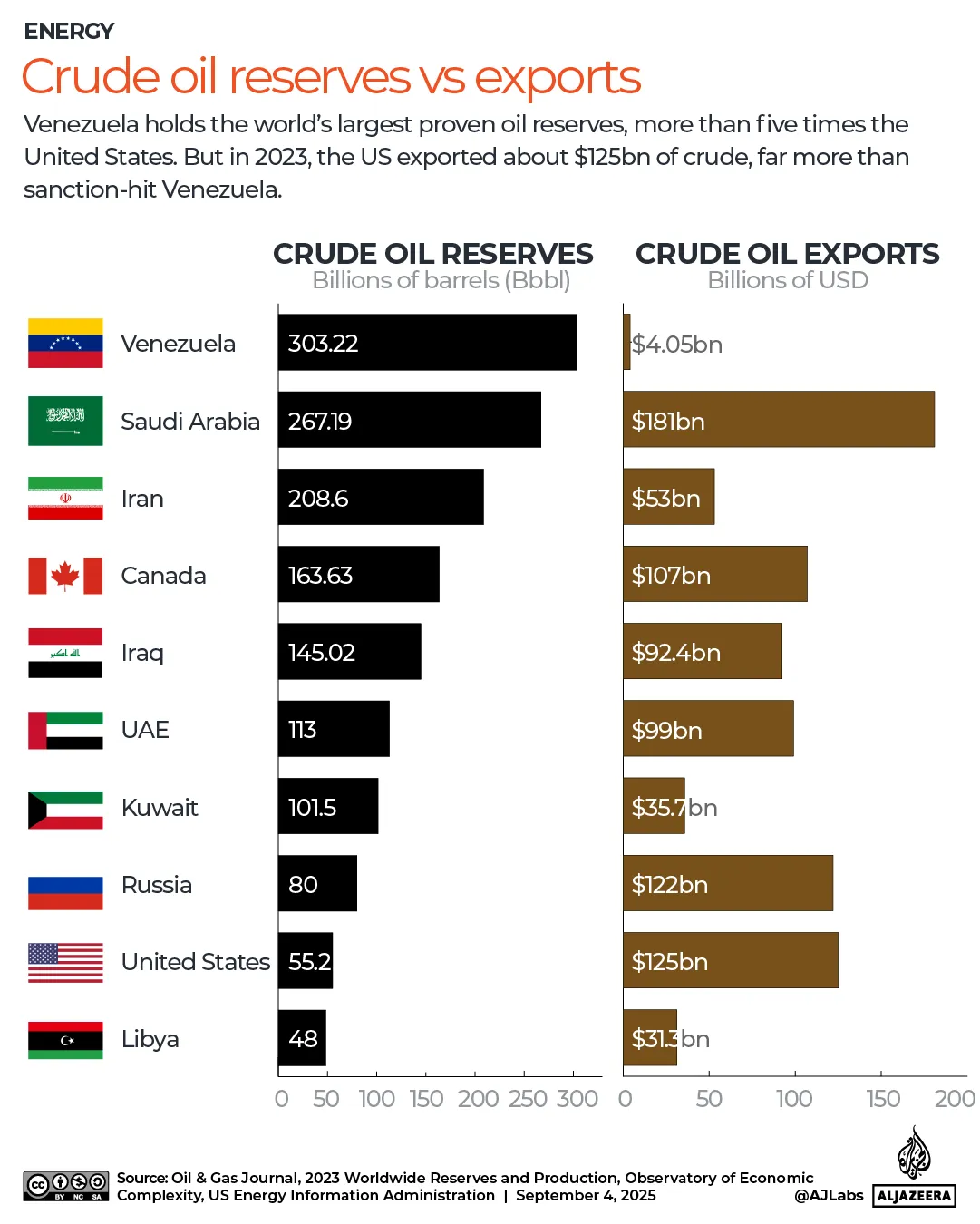
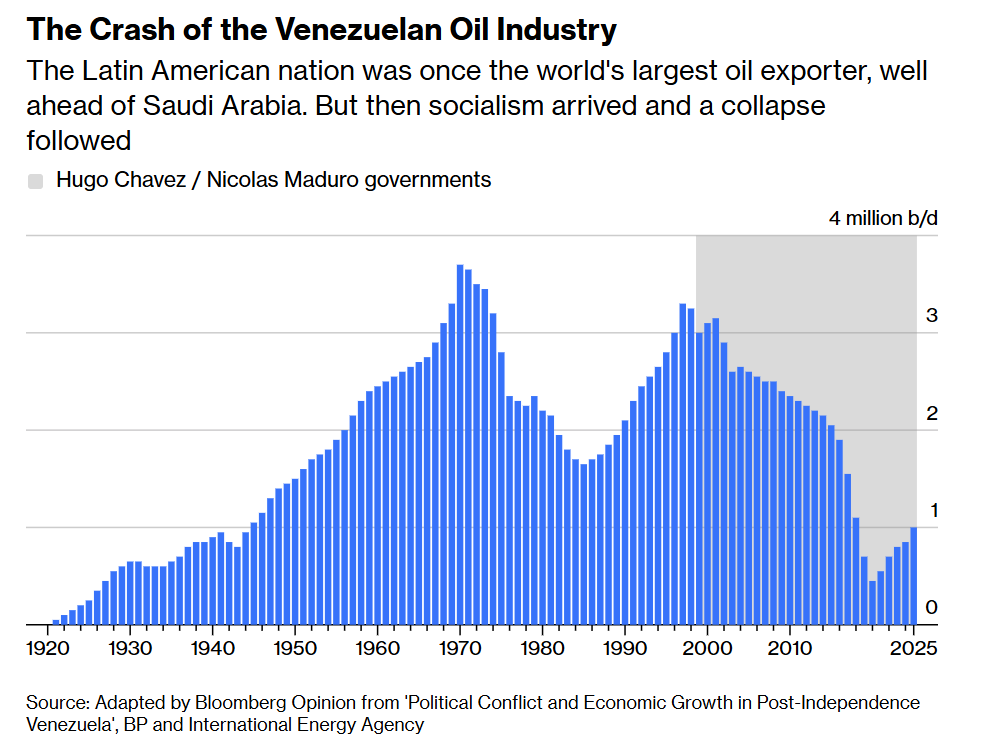
Venezuela is estimated to possess 303bn barrels of crude oil (~17% of the global oil reserves) making it the most oil rich country in the world. The Venezuelan government nationalised the oil industry in the 1970s during which the country was producing 3.5 million barrels per day (~8% of global oil production) and contributed ~1% to global GDP. Over the last 50 years, high-level corruption during the Chavez and Maduro regimes placed the country into a state of disrepair with hyperinflation and real GDP declining by 70%. Today, Venezuela only produces 0.95 million barrels per day (~1% of global oil production) and contributes 0.1% to global GDP. Many US oil companies were chased out of the country over this time with assets seized by the government and little to no remuneration.
The Role Of The US
The existing oil infrastructure is in a poor state of condition, and the US is planning to invest and develop the oil industry to its former glory. This is by no means cheap and quick and is estimated to require over $100bn in investment over the next decade. In addition, US oil companies will want solid reassurances that there will be stability in Venezuela before opening for business. Therefore, in the short- to medium-term it is highly unlikely we will see a massive surge in oil supply and decline in the oil price but rather a gradual change as infrastructure is redeveloped and as incremental supply enters the market.
It is likely that Venezuelan oil exports will be halted in the short-term as the industry navigates the uncertainty and reconsolidates. Currently, the global oil market is believed to be in a state of ample supply and given that only 1% of the global oil supply is supplied by Venezuela (with most of it being sanctioned) no material impact on the global economy is expected.
What Does This Mean For The Markets?
When markets opened on Monday, gold rallied, European defence stocks moved up, oil companies received a boost in premarket trading and oil prices traded up marginally but for broader markets it was just a normal day. History has shown that during similar moves by the US in Iraq, Syria, Iran, etc. had short-term drawdowns reversed quickly after the event occurred if there were any drawdowns at all.
This is still a developing story but given the facts it appears markets will not react adversely where a change will be warranted in portfolio construction. The move appears to be more geopolitical in nature than economic as the US tries to resist China and Russia, who had a large presence in Venezuela, from achieving the upper hand in the global race for power. Economic benefit to the US is likely in the long-term but still uncertain as the Venezuelan economy is required to stabilise.